PH 5-4½

Poul Henningsen designed the three-shade system during 1925/1926. The first lights using the system were designed for an exhibition in Paris. His work with Louis Poulsen continued until his death in 1967. Throughout his life, PH sought to create glare-free lighting; aiming to direct light where it was most needed, and creating soft shadows while using incandescent bulbs as a light source. The four-shade system was launched in 1931 to create a fixture that could be mounted high up and serve as an alternative to the commonly used chandeliers. The PH four-shade fixture was designed to increase the amount of light emitted horizontally to provide greater illumination of walls and shelves than was possible using standard three-shade lights. It was removed from the Louis Poulsen standard range in the 1940s, but was redesigned in 1979 by Danish architects, Sophus Frandsen and Ebbe Christensen, for the Charlottenborg exhibition building in Copenhagen (although in a larger size: PH 6½/6). To resolve the never ending glare problem, the two architects decided to add a small blue shade to the design. They also included a new surface with a more matte, white painted shade, to achieve a more even, comfortable light, ideal for museums and exhibition rooms or as general lighting in rooms with high ceilings. A smaller version, the 5/4½, was created for the Aarhus Concert Hall in 1984.

Choosing a finish, size or configuration? Our complimentary design service can help.

Notify me when it is back

We will email you when this piece is back in stock.

Thanks, we will email you when it is back in stock.

Sent to . Use a different address

Details
18.3"Ø x 12.5"H, Cable Length: 144"

Materials
Shades: Spun aluminum
Struts: Rolled aluminum
Light Source
Please Select
Certification
cULus Listed, Damp Location

Louis Poulsen offers a 5-year warranty on lighting fixtures, and a 2-year warranty on portable fixtures, such as table and floor lamps, and on separately purchased components, such as replacement parts.

Designer

Louis Poulsen was established in Copenhagen in 1874, and its story began with the introduction of fine wines to the Danish market. By 1892 its focus had shifted towards lighting, and in 1924 its collaboration with Poul Henningsen began, followed by Arne Jacobsen in 1960 and later Verner Panton. Its collection spans pendants and ceiling lamps, floor, table and wall lamps, and outdoor lighting.

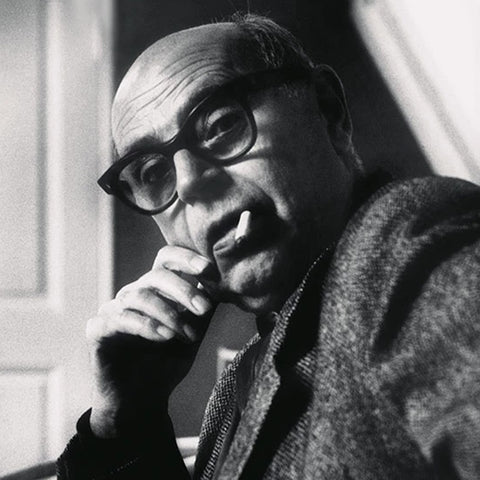
Poul Henningsen (1894-1967) was a highly influential Danish designer, architect, writer, and cultural critic, renowned for his pioneering work in lighting design, which remains integral to Louis Poulsen’s heritage. Born in Copenhagen to writers Agnes Henningsen and Carl Ewald, Henningsen initially practiced functionalist architecture but became famous for his innovative lighting designs. During WWII, he briefly served as the head architect for Tivoli Gardens before fleeing to Sweden, where he joined a community of Danish artists.

Shop Poul Henningsen

Brand

Louis Poulsen was established in Copenhagen in 1874, and its story began with the introduction of fine wines to the Danish market. By 1892 its focus had shifted towards lighting, and in 1924 its collaboration with Poul Henningsen began, followed by Arne Jacobsen in 1960 and later Verner Panton. Its collection spans pendants and ceiling lamps, floor, table and wall lamps, and outdoor lighting.

Designer

Designer

Poul Henningsen (1894-1967) was a highly influential Danish designer, architect, writer, and cultural critic, renowned for his pioneering work in lighting design, which remains integral to Louis Poulsen’s heritage. Born in Copenhagen to writers Agnes Henningsen and Carl Ewald, Henningsen initially practiced functionalist architecture but became famous for his innovative lighting designs. During WWII, he briefly served as the head architect for Tivoli Gardens before fleeing to Sweden, where he joined a community of Danish artists.

Shop Poul Henningsen