PH 3-2½ Wall Lamp

The fixture is designed based on the principle of a reflective three-shade system, which directs the majority of the light downwards. The shades have a matte white painted interior surface, diffusing the light in a comfortable way.

Poul Henningsen pioneered the three-shade system in 1925/1926, debuting it at a Paris exhibition. His collaboration with Louis Poulsen spanned until his death in 1967. Throughout his career, Henningsen focused on creating glare-free lighting, using incandescent bulbs to direct light where needed and cast soft shadows. The PH 3/2½ Wall is part of this iconic family, with 19 versions available today and over a thousand different models produced over the years. Originally, these lamps included table, floor, and wall versions, as well as chandeliers popular in 1930s homes with high ceilings, offering numerous combinations in various colors and sizes.

Initially crafted from metal with painted undersurfaces for different lighting effects, such as diffuse, warm, or cold light, the system later incorporated glass shades. Henningsen's scientific approach used the logarithmic spiral to ensure even light distribution and control of glare and shadows through diffuse reflection. Each shade size in models like the 2/2 corresponds to a specific type of light diffusion. For instance, the PH 3/2½ Wall utilizes a larger top shade (approximately 30 cm) with lower shades from the 2½ model, adapted for pendant use at lower heights. Introduced in 2005, it underscores Henningsen's legacy in wall, floor, and table lighting solutions.

Choosing a finish, size or configuration? Our complimentary design service can help.

Notify me when it is back

We will email you when this piece is back in stock.

Thanks, we will email you when it is back in stock.

Sent to . Use a different address

Details

12.1"L x 11.1"Ø x 10.9"H, Base Plate Diameter: 6"

Materials
Shades and arm: Stainless steel
Shade holder: Die formed glass
Mounting plate: Die cast aluminum
Black powder coated finish
Light Source
1 x 15W LED A19 Medium
Certification
cULus Listed, Wet Location

Louis Poulsen offers a 5-year warranty on lighting fixtures, and a 2-year warranty on portable fixtures, such as table and floor lamps, and on separately purchased components, such as replacement parts.

Designer

Louis Poulsen was established in Copenhagen in 1874, and its story began with the introduction of fine wines to the Danish market. By 1892 its focus had shifted towards lighting, and in 1924 its collaboration with Poul Henningsen began, followed by Arne Jacobsen in 1960 and later Verner Panton. Its collection spans pendants and ceiling lamps, floor, table and wall lamps, and outdoor lighting.

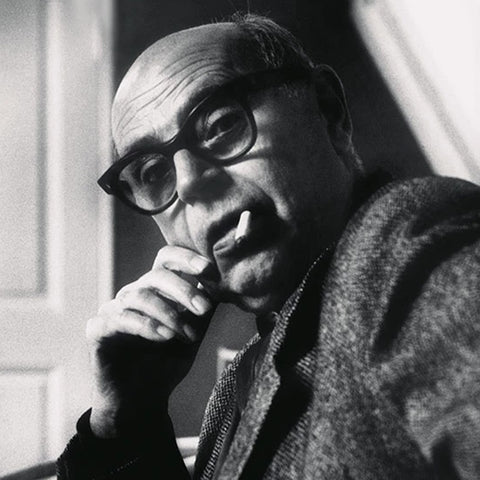
Poul Henningsen (1894-1967) was a highly influential Danish designer, architect, writer, and cultural critic, renowned for his pioneering work in lighting design, which remains integral to Louis Poulsen’s heritage. Born in Copenhagen to writers Agnes Henningsen and Carl Ewald, Henningsen initially practiced functionalist architecture but became famous for his innovative lighting designs. During WWII, he briefly served as the head architect for Tivoli Gardens before fleeing to Sweden, where he joined a community of Danish artists.

Shop Poul Henningsen

Brand

Louis Poulsen was established in Copenhagen in 1874, and its story began with the introduction of fine wines to the Danish market. By 1892 its focus had shifted towards lighting, and in 1924 its collaboration with Poul Henningsen began, followed by Arne Jacobsen in 1960 and later Verner Panton. Its collection spans pendants and ceiling lamps, floor, table and wall lamps, and outdoor lighting.

Designer

Designer

Poul Henningsen (1894-1967) was a highly influential Danish designer, architect, writer, and cultural critic, renowned for his pioneering work in lighting design, which remains integral to Louis Poulsen’s heritage. Born in Copenhagen to writers Agnes Henningsen and Carl Ewald, Henningsen initially practiced functionalist architecture but became famous for his innovative lighting designs. During WWII, he briefly served as the head architect for Tivoli Gardens before fleeing to Sweden, where he joined a community of Danish artists.

Shop Poul Henningsen