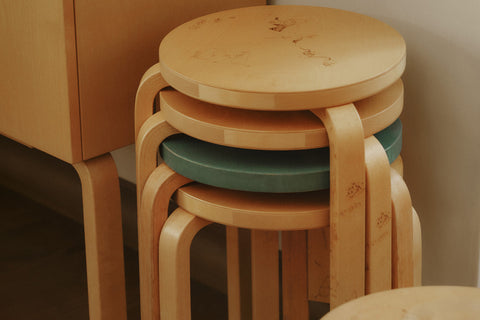

Across Canada, homeowners are moving away from disposable furniture and toward pieces that feel grounded, architectural, and built to last.
Interest in Scandinavian furniture in Canada continues to grow because it offers something increasingly rare: restraint, craftsmanship, and longevity. Rather than chasing trends, Scandinavian design focuses on balance, material integrity, and proportion.
This guide explores what defines Scandinavian furniture, why it works so beautifully in Canadian homes, and how to invest in pieces that will stand the test of time.
What Is Scandinavian Furniture?
Scandinavian furniture originates primarily from Denmark, Sweden, and Finland. While each country has its own design heritage, they share three enduring principles:
Function First
Every line, curve, and joint serves a purpose. Scandinavian designers have historically believed that beauty emerges from utility rather than ornamentation.
Honest Materials
Solid oak, walnut, wool, leather, and natural finishes are chosen for durability and character. Materials are allowed to age naturally rather than being disguised or over processed.
Timeless Proportion
Silhouettes are balanced and restrained, designed to feel relevant decades from now. Scale is considered carefully, ensuring pieces feel comfortable in both compact urban spaces and larger homes.
At its core, Scandinavian furniture is about human centered design. Pieces are built to support daily life, not dominate a room. The focus on craftsmanship, joinery, and material integrity ensures that furniture does not just look refined, but performs reliably for years.
Brands such as Fredericia and Artek and Louis Poulsen have built global reputations by producing furniture rooted in these values. Their pieces are not seasonal. They are generational.
A Brief History of Scandinavian Design
Scandinavian furniture gained international prominence in the mid twentieth century, particularly during the 1950s and 1960s. In the years following the Second World War, designers across Denmark, Sweden, and Finland focused on creating furniture that was functional, accessible, and beautifully crafted.
Rather than ornate decoration, they emphasized human scale, craftsmanship, and material honesty. Designers such as Børge Mogensen, Alvar Aalto and Poul Hennginsen believed that well designed furniture should improve everyday life. Their work blended traditional woodworking techniques with modern production methods.
This period, often referred to as Danish Modern, established Scandinavia as a global leader in furniture design. Many of the pieces still produced today by brands like Fredericia, Artek, and Louis Poulsen are direct continuations of that philosophy.
The reason Scandinavian furniture continues to resonate in Canada is simple. It was never built around trends. It was built around longevity, practicality, and restraint.

Scandinavian Furniture vs Scandinavian Inspired
The popularity of Scandinavian design has led to many interpretations. While Scandinavian inspired furniture often borrows visual cues such as light wood tones and tapered legs, authentic Scandinavian furniture is defined by construction quality and design philosophy.
True Scandinavian brands prioritize:
• Long term durability over trend driven styling
• Responsible material sourcing
• Repairability and replaceable components
• Design continuity that spans decades
This distinction matters when investing in furniture meant to last. The difference is not only aesthetic. It is structural.
Understanding this ensures that when you search for Scandinavian furniture in Canada, you are investing in pieces built on heritage rather than imitation.
These are pieces that warm a space without overwhelming it.
Flexibility for Modern Living
Canadian interiors range from downtown condos to century homes. Adaptability matters.
Modular systems provide structure without visual heaviness.
String Furniture remains one of the most intelligent modular shelving systems available in Canada. Its wall mounted configuration keeps rooms open while allowing full customization.
Modular shelving systems evolve with your space rather than limiting it.
 String Furniture modular shelving, designed to evolve with your space.
Lighting as Architecture
Lighting defines how a room feels in the evening.
Rather than relying on recessed fixtures alone, Scandinavian interiors layer light intentionally.
The PH 5 Pendant from Louis Poulsen remains one of the most iconic lighting designs available in Canada.
Its multi shade system eliminates glare while distributing soft, even light.
For a more intimate setting, the Panthella 250 Table offers sculptural presence with beautifully controlled illumination.
Lighting in Scandinavian interiors is not decorative. It is experiential.

The Essential Categories of Scandinavian Furniture
Sofas and Lounge Chairs
Scandinavian seating balances comfort with visual lightness. The best pieces feel architectural without being imposing, refined without feeling fragile.
The No.1 Sofa from Fredericia is a perfect example. Designed with clean lines and deep, supportive comfort, it embodies Danish craftsmanship at its highest level. The proportions are disciplined, the upholstery options refined, and the frame construction built for longevity.
For lounge seating, the Brasilia Lounge Chair from Audo Copenhagen reflects mid century influence while maintaining contemporary clarity.
Both pieces demonstrate what Scandinavian furniture does best: they anchor a space confidently while allowing the room to breathe.

Dining Tables and Chairs
Dining furniture reveals craftsmanship more clearly than almost any other category. It is where structure, proportion, and material integrity are most visible.
The BM71 Library Table from Fredericia is an exceptional example of Danish woodworking. Originally designed by Børge Mogensen, its solid wood construction and understated detailing make it suitable for both dining and workspace environments. It feels architectural without being heavy, refined without excess.
Pairing a table of this calibre with seating that respects its proportions is essential. The Chair 66 from Artek exemplifies Scandinavian restraint. Designed by Alvar Aalto, its bentwood frame and balanced silhouette offer durability and timeless appeal.
Together, these pieces demonstrate what defines Scandinavian dining furniture in Canada: honest materials, structural clarity, and designs that feel just as relevant decades from now.
Storage and Sideboards
Well designed storage reduces visual noise while adding architectural interest to a room.
The Enfold Sideboard from Muuto combines industrial steel with warm oak, striking a thoughtful balance between modern structure and material softness. Its sliding doors and clean proportions make it ideal for dining spaces, living rooms, or entryways.
When storage is thoughtfully designed, it becomes part of the architecture of a space rather than an afterthought. Scandinavian furniture approaches storage with the same discipline as seating or dining furniture: clarity, craftsmanship, and longevity.

Modular Shelving Systems
Few systems have achieved the longevity and versatility of String Furniture.
Its modular components allow homeowners across Canada to build vertically, adjust configurations, and expand over time.
This flexibility ensures your storage adapts as your life evolves.
What to Look for When Buying Scandinavian Furniture in Canada
When sourcing Scandinavian furniture, consider:
- Thoughtful material use, whether solid wood or responsibly applied veneer
- Durable upholstery options
- Replaceable components
- Transparent material sourcing
- Authorized retailer status
Authenticity matters. Working with a dedicated Canadian retailer ensures access to proper warranties, full finish selections, and long term support.
Sustainability Through Longevity
True sustainability in furniture is measured in decades, not seasons.
A well crafted oak dining table that lasts thirty years carries a dramatically smaller environmental footprint than furniture replaced every five. Scandinavian design has long embraced this mindset, prioritizing durability, repairability, and material responsibility.
Veneer, when used thoughtfully, maximizes material efficiency while maintaining structural stability. In Scandinavian design, it reflects intelligent construction rather than compromise.
Many Nordic manufacturers emphasize responsible forestry practices and controlled production methods, ensuring materials are sourced with long term environmental stewardship in mind.
Investing in fewer, better pieces reduces waste, supports responsible manufacturing, and results in interiors that mature gracefully over time.
A Philosophy, Not a Trend
Scandinavian furniture in Canada is not a passing aesthetic.
It represents:
- Warm minimalism
- Honest materials
- Architectural lighting
- Modular flexibility
Furnishing a home thoughtfully is not about filling every corner.
It is about selecting pieces that feel calm, considered, and built to evolve with you over time.